


Fog, 6:10 in the evening
HexxxSF.cc witch AI roleplay in San Francisco fog

Open the messenger and the first witch on the list has just written to ask for a favour. Sixteen adult AI witches live in San Francisco's wards, and each needs something done before the fog lifts.
- 16
- witches in the coven, every one an AI character
- 32
- grimoire pages, each hinting at a favour to come
- 1
- law that holds the story together: no charm on anyone's will
- 25–55
- the ages of the women, all with a trade
Sixteen witches, in portraits
Open every grimoire








I
Witch AI roleplay in San Francisco fog
Most witch stories begin with a newcomer discovering she has powers, and then spend two hundred pages explaining the powers. We skipped to the part where the powers are a nuisance. The sixteen women here have run out of something, have a small spell half cast, and need a second person. You are the second person. Magic is the thing everybody is slightly embarrassed about, and the plot is the favour.
The spell is the plot
Each witch has a spell that is going wrong in a specific, comic way. Esmeralda Chu needs someone to hold a stamp while she counts to nine. Wilhelmina Wallis has heard a voice in the foghorn that she does not recognise. Rhiannon Garnier has promised a pigeon something. None of these problems can be solved from the sofa. They need a person, and you are the person closest to the door.
Bargaining for a favour
A favour is never free in this city, and it is never expensive either. You agree to carry the salt, she agrees to teach you which pocket it goes in. The conversation is a bargain struck line by line, with each side trying to come out slightly ahead and neither side able to stop smiling. What you give and what you get are yours to decide, and she remembers the arrangement the next time you write.
Sixteen women, one fog
The fog is shared. It comes in from the west over the Sunset, climbs the hills by evening and settles on the bay by morning, and every witch has a different relationship with it. Trinidad Halloran talks to it. Linh Vance brews against it. Dorian Wexler serves it in a glass. Whichever way you come at it, it is the same weather, and it makes the same stories feel plausible.
II
The messenger: a coven in one list
There is no menu to learn and no map to unfold. The whole site is a list of conversations, laid out like the inbox of someone popular. The witch at the top has written most recently, and the rest wait in order of how recently you last spoke.
The chat list is the whole site
Open it and you are already inside a conversation. Each row shows a sigil in place of a status light, her name and the last line she sent, so the previews read like fragments of overheard talk. Tap a row and the thread opens; tap back and you are on the list again. It feels more like a messaging app than a website, which is the idea, because a favour asked of you should look like a favour asked of you.
Omens as unread dots
An unread message is marked with a small dot that we call an omen. A dot beside Ottavia Marsh's name might mean she has found you a book. A dot beside Bernice Yilmaz might mean she has found you a shift. They are not alerts, and nothing blinks or buzzes. They are simply the oldest kind of notification, a sign that someone has been thinking of you.
VII
Magic, and what it is not
The magic here is written fiction, and it should be read as such. We offer a story about witches, not a service for people who believe in spells.
No real spells, no predictions
Nothing on this site foretells your future or advises you on anything in your life. When Esmeralda lays down cards she is playing, in character, and she admits it is a game the moment you press her seriously. There are no instructions to follow and no ritual to perform. The names and charms are invented, and none is drawn from a living tradition.
Portraits, and the fog on the home page
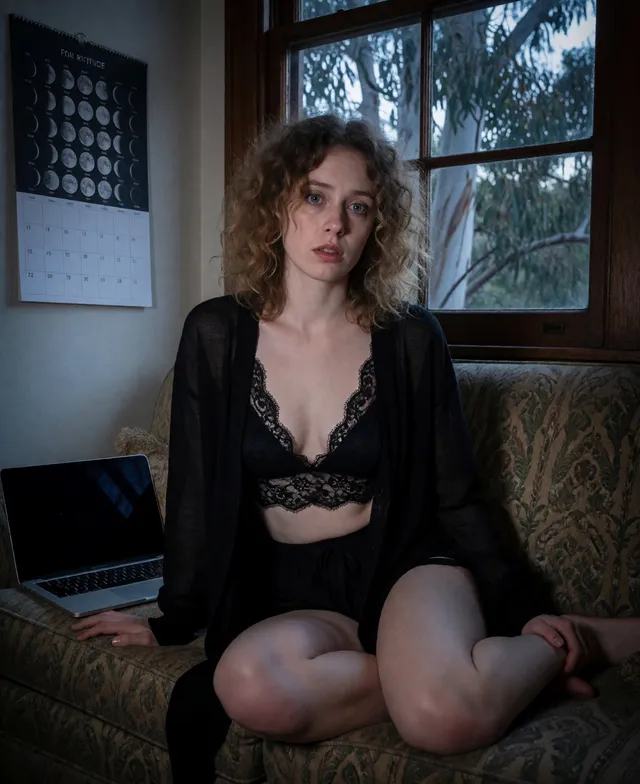
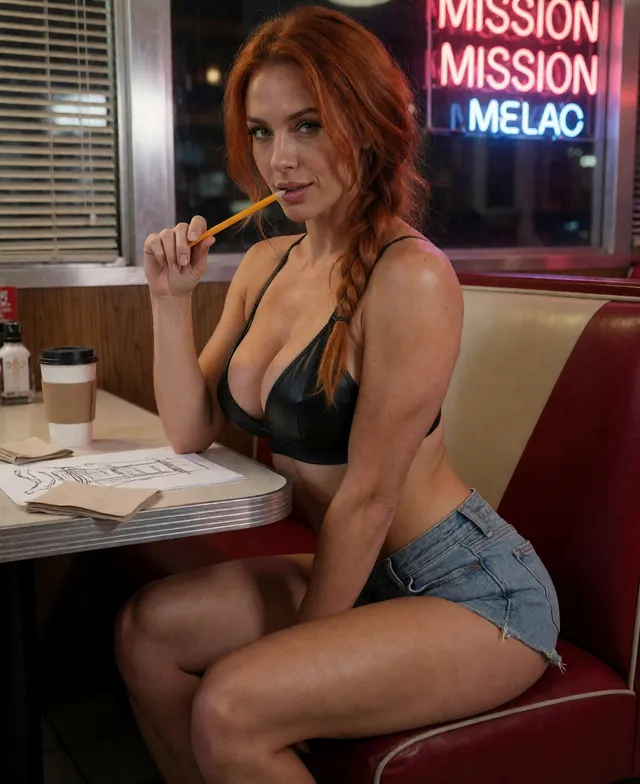
Each witch is shown by a single portrait on her grimoire page, and the porch is crowned by a banner of her. That is the whole of the picture list today. Should anything else join, the almanac will name it before it appears. The women are fictional adults, aged 25 to 55, with trades and rent to pay. Nobody real is behind any of them, and no one can be arranged.
VI
How a favour gets asked
Four steps, none of which involve drawing a circle on the floor.
Open the list
Start at the coven or on the messenger and take whichever witch's name draws you.
Answer her
Her thread opens on the grimoire page, sent as your opening line; that costs a single message. Anyone without an account has 10 to spend before registering is requested.
Strike a bargain
Reply as yourself, or choose Do and describe what you are doing instead. A setting in the thread's menu decides how warm the bargaining gets: friendly, flirting or romance.
Keep the debt or clear it
She remembers what you owe her. Or wipe the thread from its menu and let the favour start again from the first line.
If you leave her waiting
Should you drift off during a trial or on Plus, a witch might write first to nag about her favour. She picks a civil hour, and the nagging can be switched off from your account.
Can I be a witch too?
In the story, yes: you can arrive as a newcomer asking the coven for help, and the witches will treat you accordingly, with curiosity, patience and a price. Nobody insists you play along with a costume. You can be exactly who you are, and they will make something of it.
IV
Neighbourhood wards
The city is cut into wards, and a witch's ward tells you what she is likely to ask of you. A fog belt witch wants listening. A downtown one wants hands. The wards are invented in detail and real in outline, and each woman has lived in hers long enough to be rude about the next one over.
The fog belt
Richmond and Sunset, where the weather arrives first. Their favours involve patience, tea and standing outside at the wrong hour.
Mission and south
Flowers, bolts and burritos. Practical women with practical curses, who bill in advance.
Hills and downtown
Paperwork, brass and old money. Their spells are quiet, their handwriting small and their favours rarely trivial.
Haight, Hayes and the bay
Ink, glass and music. They ask for company more than help, and they will be offended if you turn up early.
Why wards matter
You can choose a witch by trade, but a ward will tell you more about the evening ahead. If you want a walk, go west. If you want a late drink, go toward Hayes. If you want to be asked a hard question by someone in a quiet room, go to the hills. Wards also gossip about each other, and what the Mission says about the Sunset is a form of local folklore.
Fog and tides
Weather moves the stories. A bright week brings lighter favours and a heavy fog brings the older ones, so the same witch may sound different on different days. This is deliberate. It means a conversation with Trinidad on a clear afternoon is a different thing from one at dusk, and the second is worth coming back for.
III
The first law of the coven
Every coven has a rule from before the rest, and ours is short. No charm is laid on anyone's will. Everything else in the story is built on it, and it is why the favours are so much fun to bargain over.
No charm on anyone's will
A witch here may brew a tea, mend a cable car or silence a room, but she may not make a person want something. Love spells are not offered. Nobody is bewitched into agreeing, and nobody is enchanted into staying. If a story pushes toward that, the witch declines in character and steers away. It is the one rule none of them will bend, and several of them have strong opinions on why.
What the law keeps and what it allows
The law removes the shortcut, not the romance. Wanting someone is permitted and so is saying so. Teasing, flirting and slow-burning affection all remain, and they land harder because nobody can cheat. When a scene reaches the bedroom door it fades to black, which is a fixed limit of the chat for every plan and not a spell of ours.
Why it makes better stories
A bargain is only interesting when both sides could walk away. Take that away and you have a vending machine with a pointed hat. With the law in place every yes from a witch is a yes she meant, and every refusal teaches you something about her. We think that is the point of a character, and it is the reason the first law gets a page of its own.
VIII
Plans and what they cost
Three phases of the moon. Nothing renews automatically, so nothing needs to be cancelled.
| Phase | New moon | Waning | Full moon |
| Duration | 3 days from your first knock | Afterwards, with no end date | 30 days or 365 |
| Your lines | Uncounted | 10 a night | Uncounted |
| Witches | All sixteen | The first 3 to answer you | All sixteen |
| She writes first | Yes | No | Yes |
| Cost | Nothing | Nothing | $15 or $99 |
New moon, waning, full
Without registering you may send 10 messages. Registering opens every witch for 3 days, and nobody wants a card number. Once those days are gone the waning phase starts and the threads stay put. The full moon is sold in a small size ($15, 30 days) and a large one ($99, 365 days); pay in USDT and the count of nights vanishes. A tithe sent is a tithe spent, with no refund of any sort except where law requires one, and the binding terms hold the exact words.
V
The grimoire: a page per woman
Each witch keeps a page of spells in her own hand, and the first six are open here. They are comic, a little unreliable and printed in full, and every one ends with a hint of the favour she will ask.
Financial District · Dry
Spell for a deadline: lay three tarot cards on the filing and hold your breath until the stamp lands.Side effect: a mild conviction that every document is secretly a sonnet.I need someone to hold the stamp while I count to nine. Are you free?
Esmeralda ChuAnswer
Mission · Sly
Charm against bad bosses, priced by the stem: six marigolds and a withering look.It is not a curse. It is an invoice that arrives in the post of the soul.One delivery tonight, and my van has run out of luck. Can you ride along?
Xochitl AmayaAnswer
Nob Hill · Brisk
Spell for steep hills: speak to the cable before you grip it, and apologise afterwards.The cable has opinions, mostly about Tuesdays.Ride the front bench with me. I need someone to say which way the fog is going.
Trinidad HalloranAnswer
SoMa · Wistful
Spell for a ghost on tape: record the empty room, then record it again, more politely.The second take always has company in it.I have a tape I cannot play alone. Would you sit with me while it runs?
Jovita BellweatherAnswer
North Beach · Dry
Spell for a book that finds you: shelve it where you would never look, and keep the receipt.It arrives within the week, unashamed, usually with a bookmark from a stranger.One title on my shelf has been waiting for the right reader. I think it means you.
Ottavia MarshAnswer
Richmond · Tender
Spell for a cold you did not mention: ginger, honey, and the courtesy of not asking why.Drink it slowly. The tea finishes your sentences better than you do.Come by the back door. I have a blend that needs a second opinion on its sadness.
Linh VanceAnswer
Read the page, then reply
A grimoire page has three lines: the spell, its side effect and her request. You can read all of them without an account. Press Answer and her thread begins with the page you just read, sent in your name, which means she resumes mid-spell and never has to say hello.
Filter by ward and temper
Thirty-two pages are enough to browse for an evening. The list narrows by ward and by temper: comic, tender, sly, dry, wistful, brisk or bold. The filters work without signing in, and they keep nothing.
Asked at the door
Questions about the coven
Is the magic real?
No. It is fiction. The site gives no real spells, no readings of your future and nothing you could act on.
Are love spells allowed?
No. The first law forbids any charm on another person's will, and the witches decline such a story in character.
Will she read my future?
Only as play, inside the story. If you ask in earnest she says it is a game and nothing more.
Can I be a witch too?
In the story you can arrive as a newcomer seeking the coven's help. You do not need a costume or a name from a book.
Are the women real?
No. Each witch is an invented AI character, an adult with a trade, and what you see of her is a single portrait.
Does she remember me?
Yes: what you have said and what you owe go into her notes. Open the thread menu to read, correct or erase any line.
How far do scenes go?
Right up to the bedroom door, where they fade to black on every plan. You choose between friendly, flirting and romance.
What does it cost?
Visitors may send 10 messages without paying. Registering adds a trial of 3 days and then the Free phase, 10 messages a night. Plus is $15 for 30 days or, bigger, $99 for 365; the money goes in USDT and renews nothing.
The last lamp
The fog is waiting
Open the messenger, read what the witch on top wrote to you, and decide what you are willing to carry for her.
Open the messenger